
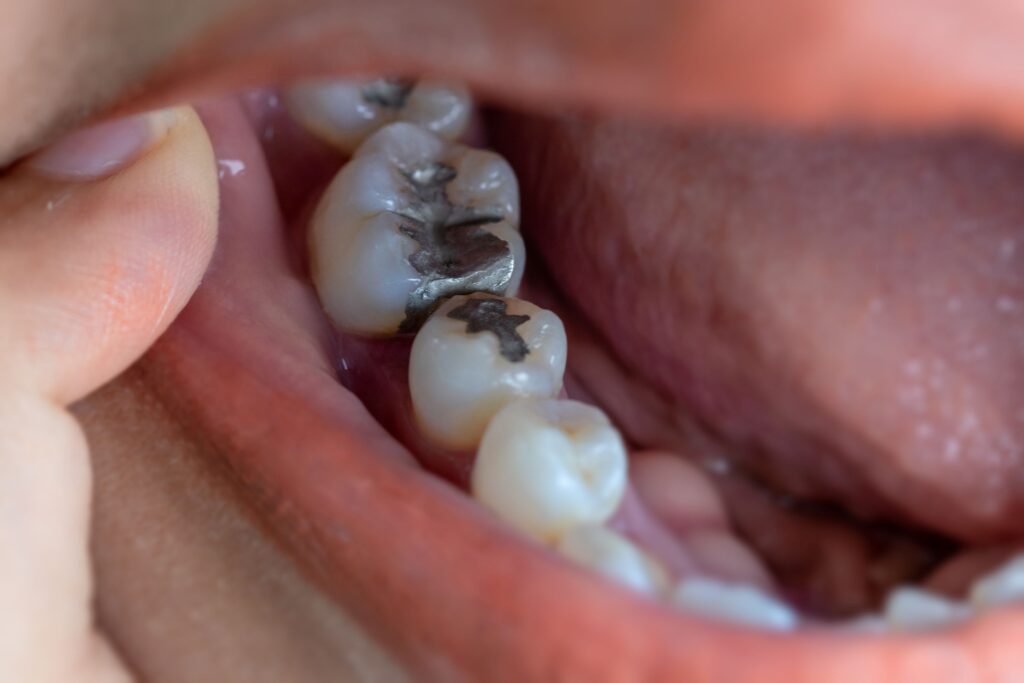
Historically, dentists relied on silver dental fillings to prevent cavities from progressing while rebuilding a tooth’s functionality. Although the metals used in these amalgam repairs are durable enough to withstand the pressures of biting and chewing, they also pose a few risks that could harm your oral or overall health.
Fortunately, many dentists today use biocompatible tooth-colored materials to treat tooth decay instead. Continue reading to learn more about each option and why you might want to consider replacing older restorations with more contemporary solutions!
What are Metal Fillings Made From?
Understanding the different components of silver fillings is essential to making an informed decision about which material is right for you. Also known as metal or amalgam fillings, they contain powdered alloys of ingredients like silver, tin, copper, or zinc.
These are mixed with about 50% liquid mercury as a bonding agent, which is malleable when applied and then hardens into a resilient repair that can last 10+ years with proper care.
What are the Risks of Metal Fillings?
You’re not alone if you’re asking yourself why you should replace silver fillings with more contemporary, tooth-colored materials. But the truth is that silver restorations can sometimes be problematic in different ways.
For example, the metals used can emit vapors and particles that can be inhaled or swallowed, triggering allergies in certain patients. This is particularly true of the liquid mercury, which is known to be toxic in high doses. Although one or two amalgam fillings might not be overly harmful, if you have 8 or more of these repairs, you could potentially absorb dangerous levels of this ingredient.
Furthermore, amalgam materials are not biocompatible, so additional notches must be carved into the teeth to anchor them. These metals also expand and contract with temperature changes, which can increase sensitivity and cause additional erosion.
What are the Benefits of Tooth-Colored Restorations?
Meanwhile, tooth-colored fillings are made from composite resin, which is made of microscopic particles of glass and plastic. This material can be customized to match the hue of your enamel for beautiful, hard-to-spot results that can boost your confidence in your appearance.
Plus, because it’s biocompatible, it also bonds with the surface of your teeth to preserve more of their structure and stability. You might worry that your new dental filling won’t last as long, but thankfully, these repairs are known to remain in good condition for 10 to 15+ years when they’re well maintained.
If you have additional questions about the risks and benefits of different types of dental repairs, you can learn which options are right for you by scheduling an appointment with your dentist!
Meet the Author
Dr. Zachary Brice is an accomplished dentist who is passionate about helping his patients build and maintain healthy teeth and gums. He earned his dental degree at the University of Texas Health Science Center San Antonio Dental School, and is committed to continuing education to advance his knowledge and skills. Today, he offers a complete menu of services, including resilient, tooth-colored restorations, to meet your unique dental care needs under one roof. If you’re interested in replacing amalgam fillings, you can request an appointment on the website or call (210) 903-5565.