
Most people tend to think of their teeth when they think about oral health. However, gum health is equally important to consider, especially since your teeth can’t stay in place if your gum tissue is unhealthy. Gum disease is the leading cause of tooth loss in American adults, which is why Dr. Brice offers multiple treatments to protect and restore your gum tissue as needed. If you’re experiencing tender, red, swollen, or inflamed gums, we can get you back on the right track. Call us today to schedule an appointment for gum disease treatment in San Antonio at Brice Dental!
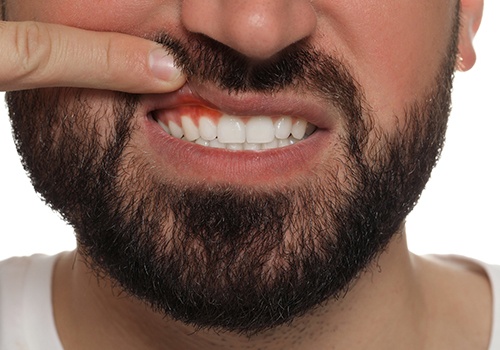
Gum disease occurs when the tissues responsible for supporting your teeth become infected. The main stages of gum disease are gingivitis and periodontitis. Gingivitis is a relatively mild oral health issue, and you may even be able to reverse it by improving your oral hygiene routine. Over time, however, untreated gingivitis can turn into periodontitis, which is much more severe. Fully curing periodontitis is not possible; the only option is to manage it so that it doesn’t grow any worse.

When your gum disease is in the gingivitis stage, you may notice unusually red or swollen gum tissue as well as bad breath that won’t go away. Additionally, your gums may bleed more easily than normal, especially when you brush or floss your teeth.
If your gum disease reaches the periodontitis stage, you’re likely to notice a number of serious symptoms, such as loose permanent teeth, pain while chewing, or changes in your bite. In the worst-case scenario, you may even start losing teeth altogether.

Our team will need to perform a careful examination of your mouth in order to determine how advanced your gum disease is. After that, we’ll share our findings with you and explain what treatment options are available. Below is a closer look at the various ways we can help you get your gum disease under control.
After your deep cleaning is completed, we can provide Arestin antibiotic treatment to kickstart the process of helping your gums heal. Once applied inside the deep pockets between your gums and teeth, the antibiotic begins to break down bacteria and reduce the inflammation present inside the gum tissue. Once you come back for your follow-up appointment, we’ll make sure that the antibiotic is working as intended. This treatment is painless and only takes a few minutes to complete.
With our state-of-the-art dental laser, we can precisely remove any gum tissue that has been severely damaged by gum disease. On top of that, the energy from the laser can help kill the bacteria responsible for your gum infection. One of the key advantages of using a laser for periodontal treatment is that any exposed blood vessels are immediately sealed; this significantly reduces bleeding and can help you stay more comfortable during the recovery process.
As noted above, periodontitis is not truly curable. In order to prevent it from growing more severe, periodontal maintenance is necessary. You’ll need to visit our office every three to four months so that we can check the current state of your gums. During these appointments, we’ll remove the plaque and tartar deposits that have built up around and below your gumline since your last visit. With periodontal maintenance, our team will be able to help you keep your gum disease under control and protect the rest of your smile.
In many cases, gum disease is treated with a deep-cleaning process that consists of two main stages. The first stage is scaling, which involves removing any plaque or tartar that is contributing to your gum infection. We’ll take the time to clean deep below the gumline in order to get rid of the bacteria that you wouldn’t be able to reach with brushing and flossing alone.
After scaling comes the root planing stage. This is when we gently smooth out the roots of your teeth, creating a surface where bacteria will have a harder time accumulating in the future. Smoother roots will also make it easier for your gums to reattach themselves to the teeth.

It’s true that not everyone with gum disease needs scaling and root planing. Some patients can successfully mitigate the condition with increased oral hygiene efforts at home. However, you won’t really know for sure until you visit us for a consultation. Dr. Brice will be able to perform a thorough exam and assess how severe your case of gum disease is. Based on his findings, he may recommend scaling and root planing, or one of our other services.
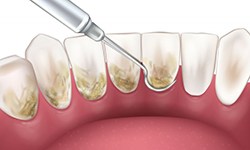
For the scaling portion of your treatment, Dr. Brice will remove plaque and tartar from your teeth as well as from below your gumline. The process will be similar to a routine cleaning, but will ultimately be more thorough. The goal is to eliminate any bacteria that could be contributing to gum disease.
During root planing, Dr. Brice will gently massage your gums to smooth out your dental roots. As gum disease progresses, it can make your gum tissue pull away from your teeth. This creates small empty “pockets” that bacteria can then hide away in. Root planing encourages your gum tissue to reattach to your teeth, closing the pockets and helping to prevent future reinfection.

It’s normal for gums to be sensitive, swollen, or red for about a week after scaling and root planing. Remember, your mouth will essentially be healing from a deep infection, so there are certain things you should and shouldn’t do if you want your recovery to go smoothly. We’ll provide you with detailed aftercare instructions before you leave our office, but here are the basics:
Do:
Don’t: