
Spaces in your smile left by one or more consecutive missing teeth can make essential tasks, like eating and speaking, much more challenging, which can affect your nutrition and daily quality of life. You might also feel self-conscious about the changes to your appearance or worry that others might judge you for your dental condition.
Fortunately, Dr. Brice can close the gap and restore your smile with a customized dental bridge. Continue reading to learn more about this treatment to help decide if it’s the best option for you!
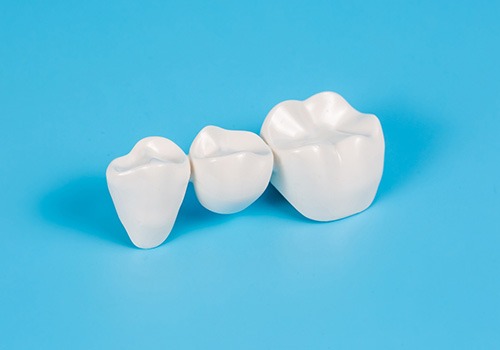
This treatment is ideal for those who have lost at least one permanent tooth or have a wider gap in their smile due to several consecutive losses. It consists of placing a dental bridge, which is an oral appliance that contains the necessary number of artificial teeth with a dental crown on each end, to rebuild your arch’s appearance and function.
These prosthetics are usually made from a resilient, durable ceramic that can be customized to match your natural teeth for a beautiful repair with no one the wiser. But this material is less porous than your enamel and therefore more resistant to chipping, cracking, and discoloration.
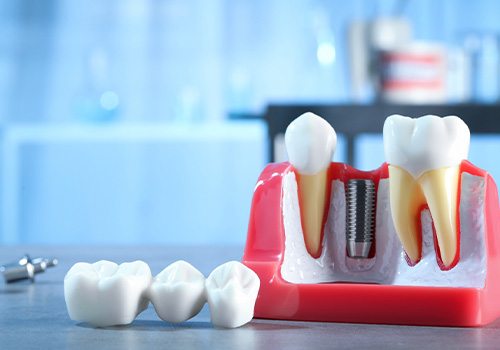
Although this is a popular and versatile solution for tooth loss, that doesn’t necessarily mean it’s the best way to meet everyone’s unique needs. Before proceeding, you must consult Dr. Brice to determine that you’re a good candidate.
Then, based on the findings of his examination, he might recommend one of the following options:
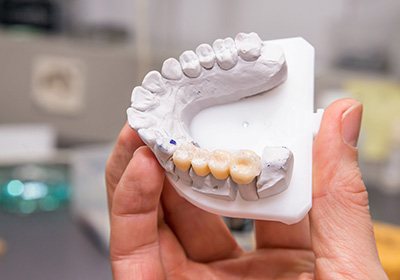
This is the more common of the two types of bridges and requires healthy teeth on both sides of the space in your smile to serve as anchors. The crowns at both ends will be cemented over them, so this method might not be recommended if you have more severe decay or damage.
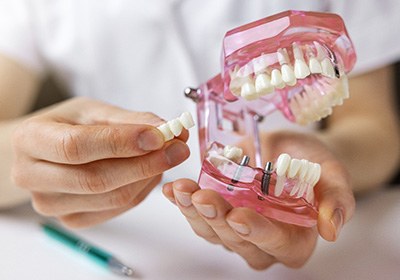
This solution involves surgically placing two support posts into your jaw, which eventually fuse with the bone to become a more permanent part of your mouth. These are used to anchor restorations for those who don’t have sufficiently strong abutment teeth to support them.
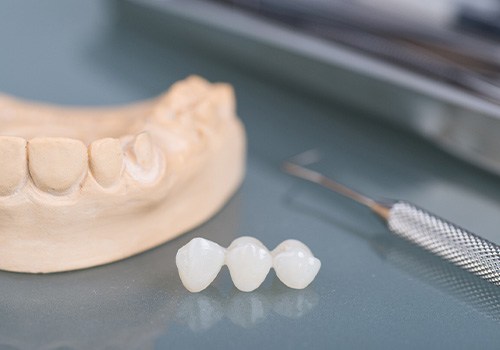
There are several excellent reasons to consider getting a dental bridge, including:
If you’ve ever heard of someone referring to partial dentures as ‘removable bridges’, it’s natural to question whether or not your restoration is designed to be frequently removed and reinserted. However, this phrasing is misleading and refers to two different treatments. Partial dentures contain metallic clasps that clip to teeth in your mouth to remain in place, and are meant to be removed for cleanings and to soak overnight while you rest.
Meanwhile, dental bridges are oral appliances that contain the required number of teeth between two dental crowns that are cemented to healthy abutment teeth or implants to close the space in your smile. They’re typically not intended to come out again, except by a qualified professional, such as Dr. Brice.
In the past, dentists relied on amalgam restorations to help rebuild teeth, but that’s not usually the case today. Our team in San Antonio provides replacement teeth made from resilient, tooth-colored ceramic.
Not only is this material durable enough to withstand the pressure of daily biting and chewing, but it also resists chips, cracks, and discoloration. It can also be color-matched to your natural enamel for beautiful, seamless results that enhance your appearance and boost your self-esteem.
Are you wondering how long your new teeth are likely to last once they’re anchored in place? Most patients can expect their dental bridge to last anywhere from 5 to 15+ years, though it can depend on their unique circumstances. For instance, if it’s placed over molars, it might wear down or fail faster due to additional pressure from frequent biting and chewing.
But the lifespan can also be affected by your habits and hygiene. You can usually help preserve your restoration by brushing and flossing twice daily, avoiding overly hard, crunchy, or sticky foods, and visiting Dr. Brice every six months for a standard checkup and cleaning.
Getting a dental bridge isn’t usually considered a painful procedure, but it involves preparatory steps that can cause soreness or sensitivity. For instance, if you’re getting a traditional bridge, a small amount of enamel must be removed from the teeth on each side of the gap in your grin so your bridge fits properly on top of them. This can cause tenderness for a few days but usually resolves on its own and can be managed with over-the-counter pain medications.
If you’re getting an implant bridge, it’s normal to feel associated aches and inflammation after your surgery. This often peaks on the third day before gradually dissipating. If you experience persistent or severe discomfort after your bridge is placed, please contact our office so we can ensure it fits and functions as intended.